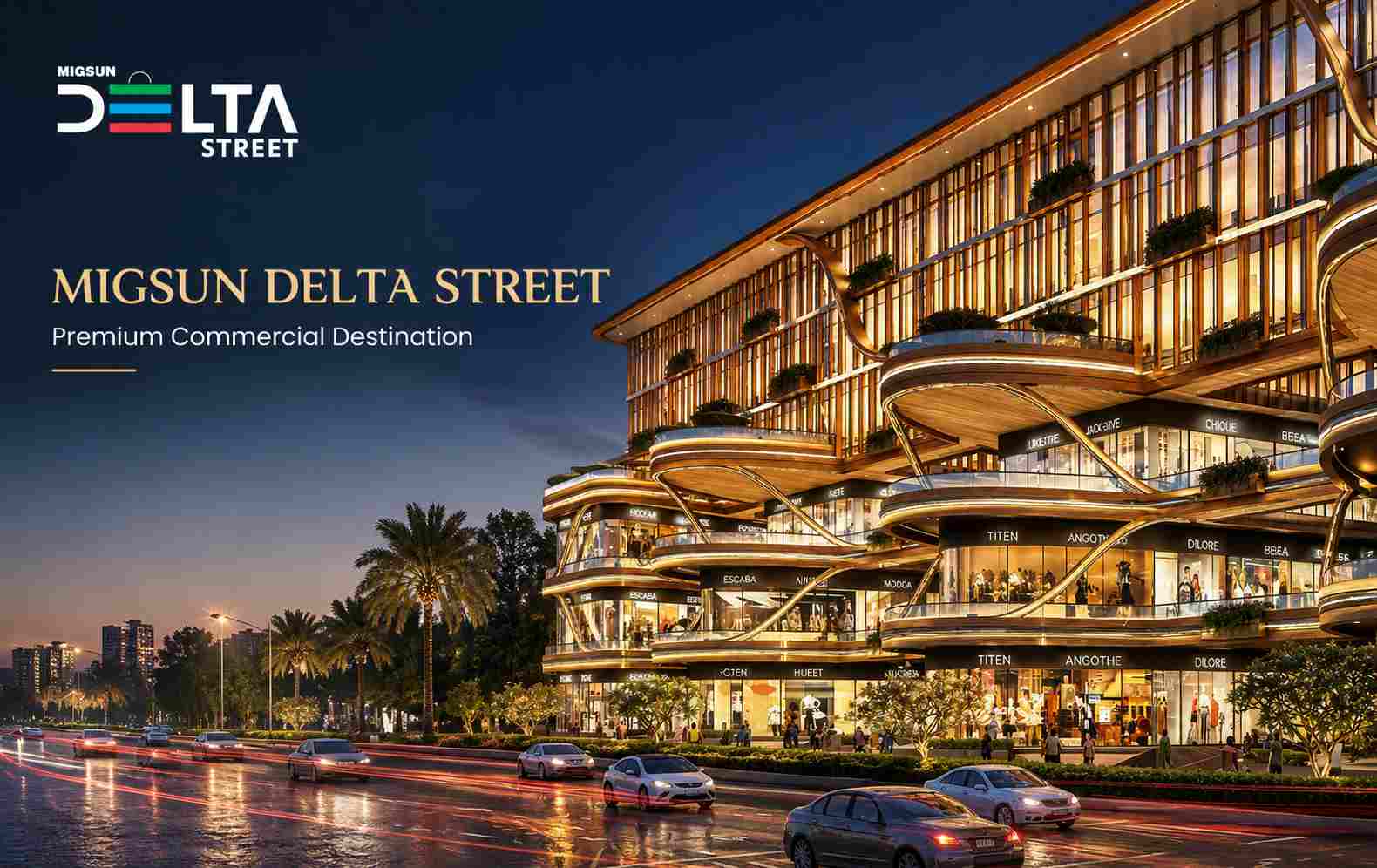
Migsun Delta Street: Understanding the Project’s Growth Potential
Commercial real estate has always attracted investors looking for opportunities beyond traditional residential properties. While residential investments often focus on rental income and long-term appreciation, commercial developments are evaluated differently. Factors such as footfall, business activity, location advantages, and surrounding infrastructure often determine their success.
As Greater Noida continues to evolve as an important residential and commercial destination, several new projects have emerged to cater to the growing demand for retail, office, and lifestyle spaces. Among these developments, Migsun Delta Street Greater Noida has generated interest among investors, business owners, and market observers who are looking to understand its long-term prospects.
However, evaluating the growth potential of any commercial project requires more than simply looking at marketing materials or projected returns. It involves examining the broader market environment, the project’s location, nearby infrastructure, consumer demand, and future development trends.
The Changing Commercial Landscape of Greater Noida
Over the last decade, Greater Noida has transformed from a developing suburban region into a rapidly expanding urban center. Improved infrastructure, educational institutions, business parks, residential developments, and transportation networks have contributed to this growth.
As population density increases, the demand for commercial spaces naturally follows. Residents require retail outlets, restaurants, service providers, healthcare facilities, entertainment options, and various daily convenience businesses.
This shift has encouraged developers to create mixed-use commercial projects that combine shopping, dining, office spaces, and business opportunities within a single ecosystem.
The success of such developments often depends on how effectively they serve the needs of the surrounding population.
Why Location Matters in Commercial Real Estate
In commercial property investment, location is often considered the most important factor.
A project may offer attractive architecture and modern amenities, but sustainable growth usually depends on accessibility and customer reach.
The Delta region of Greater Noida is among the more established sectors in the city. Unlike emerging areas that are still waiting for population growth, Delta already benefits from residential communities, educational institutions, daily commuters, and local business activity.
For commercial developments, an existing population base can be advantageous because businesses typically rely on consistent customer demand.
Projects located in areas with regular movement of residents often have better opportunities to generate footfall than locations that depend solely on future development.
Understanding the Importance of Catchment Population
One of the most overlooked factors in commercial property analysis is catchment population.
A catchment area refers to the population living and working within a reasonable distance of a commercial project. The larger and more active this population, the greater the potential customer base for businesses operating within the development.
Commercial spaces thrive when there is regular consumer demand.
Retail stores need shoppers.
Restaurants need visitors.
Service providers need customers.
Business spaces need professionals and entrepreneurs.
The surrounding residential density therefore becomes a key indicator when assessing long-term commercial viability.
Infrastructure and Connectivity as Growth Drivers
Infrastructure development plays a critical role in shaping commercial real estate performance.
Well-connected projects generally enjoy advantages such as:
- Improved visibility
- Easier customer access
- Higher business attractiveness
- Better tenant demand
- Increased convenience for visitors
Greater Noida’s road network and transportation infrastructure have improved significantly over the years. Wider roads, metro connectivity, and better links to key economic corridors contribute to overall accessibility.
Commercial projects located near established transportation routes often benefit from increased movement of people, which can support retail and business activity.
While connectivity alone does not guarantee success, it remains an important component of long-term growth.
The Growing Demand for Organized Retail Spaces
Consumer behavior continues to evolve across urban India.
Modern consumers increasingly prefer organized retail shops in Migsun Delta Street environments that offer convenience, accessibility, and a variety of services within a single destination.
This trend has encouraged the development of commercial projects designed around multiple business categories.
Such developments often attract:
- Food and beverage brands
- Lifestyle retailers
- Convenience stores
- Service-oriented businesses
- Professional offices
- Entertainment concepts
A diversified tenant mix can contribute to a more active commercial environment and help reduce dependence on any single business category.
The ability to support multiple business types may become an important factor in sustaining long-term activity.
Commercial Property Performance Depends on Occupancy
While many investors focus on projected returns, actual performance often depends on occupancy.
A commercial project creates value when businesses operate successfully within it.
High occupancy can contribute to:
- Stronger rental demand
- Better customer experience
- Increased footfall
- Greater business activity
- Enhanced investor confidence
On the other hand, vacant spaces can limit commercial momentum.
Therefore, investors should pay close attention to demand fundamentals rather than relying solely on estimated income projections.
Understanding the local market’s ability to absorb commercial inventory is essential when evaluating growth potential.
Opportunities That Could Support Future Growth: Several factors may contribute positively to the long-term prospects of commercial developments in established urban locations.
Expanding Residential Communities: As residential populations grow, demand for retail and service-based businesses typically increases.
Commercial projects that cater to everyday consumer needs may benefit from this trend.
Business and Entrepreneurship Activity: Urban growth often encourages the emergence of small businesses, startups, service providers, and local brands seeking commercial spaces.
This demand can support leasing activity over time.
Lifestyle-Oriented Consumption: Consumers increasingly spend on dining, entertainment, wellness, and convenience services.
Commercial environments that accommodate these categories may benefit from changing spending patterns.
Long-Term Urban Development : Cities continue evolving over decades rather than years.
Commercial assets located in areas experiencing sustained urban growth may gain relevance as surrounding infrastructure and population density improve.
Potential Challenges Investors Should Consider: Balanced analysis requires acknowledging both opportunities and risks.
Competition from Other Commercial Projects: Greater Noida has witnessed substantial commercial development.
New projects entering the market can increase competition for tenants and customers.
Market Cycles: Commercial real estate is influenced by economic conditions, consumer spending, and business sentiment.
Growth may not always occur in a straight line.
Occupancy Risks: Leasing commercial space can take time.
Investors should maintain realistic expectations regarding rental timelines and business absorption.
Changing Consumer Preferences: etail and commercial environments must adapt to evolving consumer behavior.
Projects that remain relevant to customer needs generally perform better over the long term.
Evaluating Growth Potential with a Practical Mindset
Rather than asking whether a project will definitely succeed, investors should focus on understanding the factors that influence its future performance.
Questions worth considering include:
- Does the location have sustainable demand drivers?
- Is there an established customer base nearby?
- How strong is the area’s connectivity?
- What businesses are likely to operate within the project?
- How competitive is the surrounding market?
- Does the project align with long-term urban growth trends?
Answering these questions often provides more useful insights than focusing exclusively on promotional claims.
Final Thoughts
Migsun Delta Street’s growth potential is closely tied to broader developments taking place in Greater Noida. Factors such as established residential communities, improving infrastructure, increasing consumer demand, and evolving commercial activity may contribute positively to its future prospects.
However, commercial real estate success ultimately depends on business performance, occupancy levels, customer engagement, and long-term market dynamics. Investors should approach the opportunity with careful research, realistic expectations, and a focus on fundamentals rather than short-term projections.
For those exploring commercial property opportunities in Greater Noida, understanding the project’s surrounding ecosystem may be just as important as evaluating the project itself. Long-term growth is often created by a combination of location strength, infrastructure support, business demand, and sustained urban expansion.
As with any investment, informed decision-making remains the key to identifying opportunities that align with individual financial goals and risk preferences.

Recent Posts
Why Migsun Delta Street is Gaining Attention Among Investors
Top Reasons to Invest in Migsun Delta Street in 2026