Could Migsun Delta Street Attract Local Lifestyle & Convenience Brands?
Commercial spaces in NCR are no longer limited to traditional shopping patterns. Over the past few years, consumer expectations have evolved significantly, especially in developing urban regions where residential growth and lifestyle changes are happening simultaneously. Today, many buyers, visitors, and businesses prefer commercial environments that combine accessibility, convenience, and everyday usability rather than depending entirely on destination-style shopping.
In this changing landscape, projects like Migsun Delta Street are gradually becoming part of discussions around organized retail activity and lifestyle-oriented business spaces in Greater Noida.
While every commercial project depends on multiple market conditions, one interesting question emerging in the current market is whether modern commercial developments can attract local lifestyle and convenience-driven brands that rely on regular consumer engagement instead of occasional footfall.
Changing Consumer Habits in Urban NCR
Urban lifestyles across NCR have changed considerably over the last decade. Consumers today often prioritize convenience, time efficiency, and accessibility in their daily routines. Instead of visiting crowded traditional markets for every requirement, many families now prefer organized commercial spaces that offer multiple services within a single location.
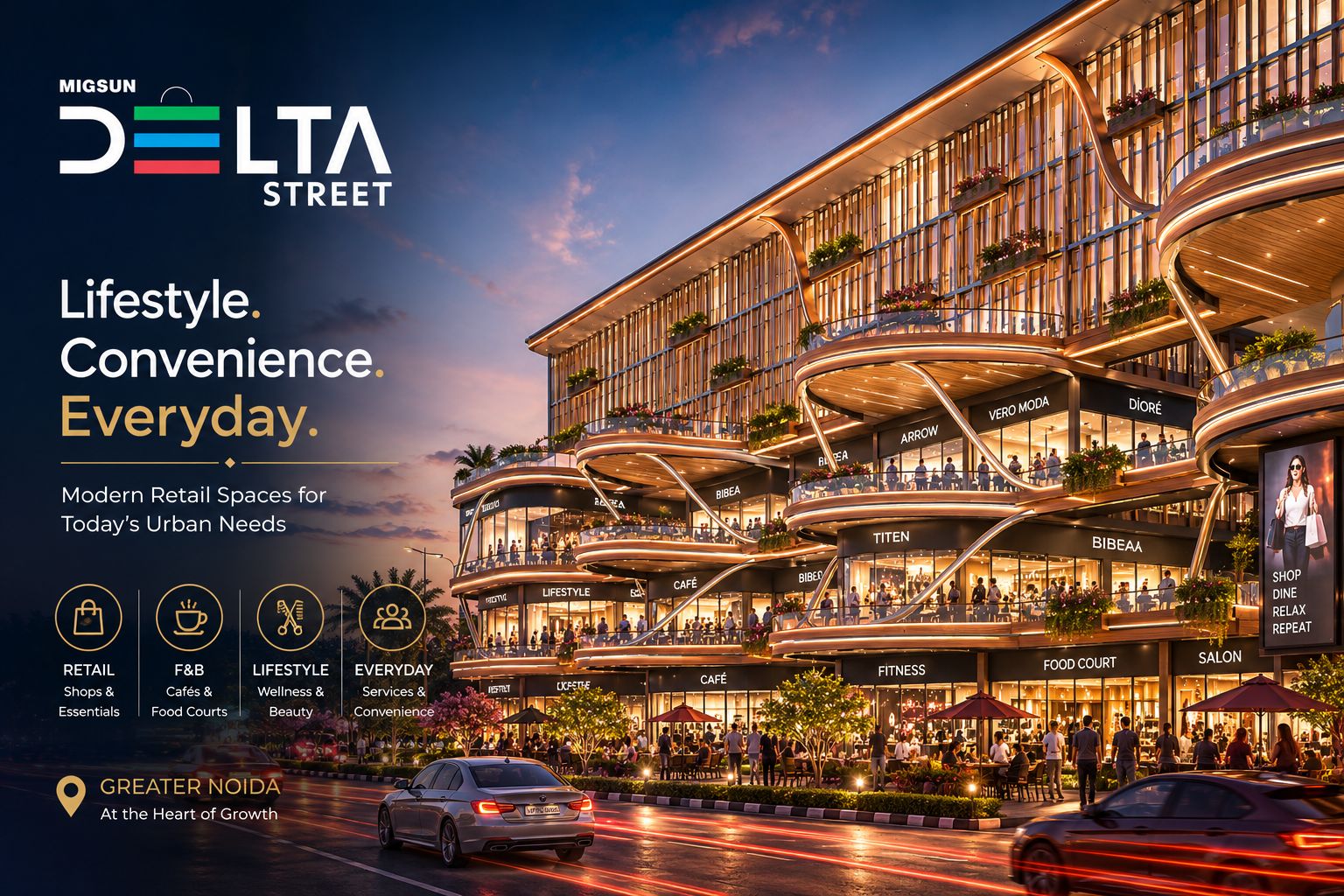
This shift has influenced how commercial projects are planned and positioned. Instead of focusing only on retail shopping, developers increasingly explore formats that can support cafés, salons, wellness outlets, food courts, convenience stores, pharmacies, and service-based businesses.
The demand for such businesses is usually stronger in regions where residential activity is increasing steadily. As urban clusters expand around developing sectors, nearby commercial spaces naturally begin attracting businesses that cater to routine consumer needs.
For projects located in emerging urban corridors, this trend may create opportunities for a more balanced retail ecosystem.
Why Convenience-Based Businesses Matter
One of the most noticeable trends in modern commercial real estate is the importance of recurring footfall. Earlier, many projects relied heavily on festive shopping seasons or weekend crowds. However, businesses today often prefer locations that can generate daily customer activity.
Convenience-oriented brands usually perform better in such environments because they serve practical and regular requirements. Grocery outlets, cafés, bakeries, clinics, quick-service restaurants, fitness studios, and beauty salons are examples of businesses that depend on repeat visits from nearby consumers.
Their presence can contribute to a more active commercial atmosphere throughout the week rather than creating temporary spikes in visitor activity.
In developing locations of Greater Noida, this approach is becoming increasingly relevant because many residents now seek organized spaces for everyday convenience rather than occasional shopping alone.
The Role of Residential Expansion
Commercial growth and residential growth are often closely connected. Sustainable retail activity generally develops in areas where residential occupancy improves over time. As more families and working professionals move into a region, the demand for nearby convenience services usually increases naturally.
This relationship is particularly important in rapidly urbanizing sectors where infrastructure development and housing activity continue simultaneously. Everyday consumer spending — whether on dining, healthcare, groceries, fitness, or leisure — contributes to the development of local commercial ecosystems.
For commercial developments like Migsun Delta Street in Greater Noida, surrounding residential density may eventually influence the types of businesses that become operational within the project.
Businesses often evaluate nearby population movement, accessibility, and long-term urban activity before selecting a commercial location. Areas with improving residential presence generally create stronger opportunities for service-led and lifestyle-focused brands.
Café & Food Culture Is Influencing Retail Patterns
Another major factor influencing commercial spaces today is the growth of café and food culture. Younger consumers increasingly view cafés, casual dining outlets, dessert spaces, and quick-service restaurants as social destinations rather than purely eating spaces.
This trend has encouraged many commercial projects to allocate significant attention to food-oriented retail environments. In several urban markets, cafés and food outlets often become early footfall drivers because they encourage repeat customer visits and longer engagement periods.
A well-positioned food court or dining zone can also influence surrounding businesses by increasing visitor movement across the commercial space. Over time, this may help create a more active retail Shops in Migsun Delta Street.
Commercial developments that support both convenience and social interaction may therefore appeal to a wider range of local businesses looking for steady consumer activity.
Why Organized Retail Spaces Are Becoming More Relevant
Traditional markets continue to remain an important part of Indian retail culture, but consumer preferences are gradually evolving toward cleaner and more organized commercial environments. Factors such as parking accessibility, pedestrian movement, structured layouts, and overall convenience now influence where people choose to spend time.
This shift is visible across multiple NCR regions where organized commercial projects are increasingly competing with older unstructured marketplaces.
For businesses, operating within an organized environment can offer advantages such as better visibility, improved customer experience, and more predictable visitor movement. These factors often matter for lifestyle brands that depend heavily on customer comfort and repeat engagement.
Modern consumers also tend to prefer spaces where they can combine multiple activities during a single visit — including dining, shopping, wellness services, and casual social interaction.
Accessibility and Visibility Remain Important
Location accessibility remains one of the key considerations for commercial businesses. Retail spaces that are easy to approach and visible from active movement corridors often attract stronger consumer engagement compared to isolated commercial pockets.
This is especially relevant for convenience-driven brands because their business models depend on frequent and effortless customer visits. Consumers usually prefer commercial destinations that integrate naturally into their daily routes and routines.
In emerging urban sectors, infrastructure development and improving connectivity may gradually influence how commercial activity develops around certain locations. Businesses often monitor these urban trends before expanding into newer markets.
Evolving Commercial Preferences in Greater Noida
The commercial real estate market in Greater Noida has gradually diversified over time. Earlier, many projects primarily focused on investor attention and future appreciation discussions. However, recent trends increasingly highlight practical usability and active consumer participation.
People today are not only evaluating commercial projects from an ownership perspective but also from the standpoint of everyday utility and long-term functionality.
As urban populations expand and residential communities become more active, demand for convenience-led retail ecosystems may continue increasing. Commercial projects that align with these practical consumer preferences could potentially remain more relevant in the evolving market environment.
Commercial Spaces Sustain Long-Term Activity?
One challenge many commercial projects face is maintaining consistent visitor activity after initial launch periods. Long-term sustainability often depends on whether a project can integrate into the daily routines of surrounding residents.
Lifestyle and convenience brands can play an important role in this process because they encourage regular engagement rather than occasional visits. Businesses connected to food, wellness, personal care, convenience shopping, and everyday services generally contribute toward stable commercial ecosystems.
If commercial spaces manage to support a balanced mix of such businesses, they may gradually develop stronger consumer familiarity and repeat footfall over time.
Conclusion
Commercial real estate patterns across NCR are gradually moving toward convenience-focused and lifestyle-oriented formats. Instead of relying entirely on destination shopping or occasional crowds, many modern commercial developments are increasingly connected to everyday consumer habits.
Factors such as residential growth, organized retail environments, accessibility, café culture, and recurring footfall are influencing how commercial ecosystems evolve in developing urban corridors. In this broader market transition, projects like Migsun Delta Street may attract businesses that focus on practical consumer engagement and routine lifestyle requirements. While long-term commercial performance depends on several market variables, the increasing demand for accessible and organized retail experiences reflects a larger shift in urban consumer behavior across NCR.

Recent Posts
Could Migsun Delta Street Attract Local Lifestyle & Convenience Brands?
Can Migsun Delta Street Deliver High Rental Income?